Triple H and WWE’s WarGames 2026 Wins and Misses
Triple H and WWE’s WarGames 2026 Wins and Misses
Introduction
Survivor Series: WarGames is designed to test WWE’s entire creative system. The event requires coherent teams, meaningful rivalries, escalating tension, effective production, and a finish that creates future value.
That makes WarGames an important examination of Triple H’s booking philosophy. The format can unite several stories, but it can also expose weaknesses. Rivalries may compete for attention, performers can disappear inside a crowded structure, and surprise moments may generate immediate reactions without producing sustainable follow-up.
WWE published its official “Full Survivor Series: WarGames results” on November 29, 2026. However, the supplied reporting does not include the full card, participants, finishes, or post-match angles. Specific claims about winners, eliminations, betrayals, or individual performances therefore require verification against the official WWE results page. Official results report
The provisional conclusion is clear: WWE succeeds when it makes WarGames feel important, emotional, and distinct. It fumbles when the event creates more stories than the creative team can clearly explain and develop.
What WWE Got Right
WarGames Is a Strong Storytelling Platform
WarGames works best when each team represents more than convenience. Participants should have clear reasons to enter the cage, whether those reasons involve revenge, faction loyalty, title contention, brand conflict, or personal distrust.
The format naturally creates escalating stakes. A reluctant partnership can reveal tension, a captain can lose control, a replacement can alter the balance of power, and a betrayal can redefine a faction. The event should answer three questions: Why are these wrestlers together? Why are they fighting the opposing team? What changes after the match?
When weekly television answers those questions, WarGames becomes the climax of connected stories rather than an isolated attraction.
Emotional Storytelling Elevates the Event
A report about the Survivor Series: WarGames countdown show described Triple H and other WWE figures becoming emotional. The supplied summary does not establish the exact context, so it should not be presented as a confirmed tribute, anniversary, return, or career milestone. Countdown-show report
The broader principle remains valid. Authentic emotion can give a major WWE event greater meaning. Wrestling relies on physical conflict, but its strongest moments often involve loyalty, sacrifice, regret, memory, or professional pride.
Emotion must support the story rather than replace it. A heartfelt countdown segment cannot compensate for weak motivations or an unclear finish, but it can give the broadcast a human dimension when it connects directly to the performers and the event’s history.
Distinctive Presentation Matters
WarGames requires a presentation that feels different from a standard premium live event. Countdown coverage, team introductions, video packages, graphics, commentary, and crowd-focused production should communicate that the event is a major annual occasion.
The countdown show can explain rivalries, clarify stakes, and establish an emotional tone before the opening bell. It should add information rather than repeat the same promotional material. The strongest presentation creates continuity between the countdown show, the main card, and the first television episode afterward.
Booking Must Protect Future Value
A result should not be judged only by its surprise. The more important questions are whether the finish matched the story, whether the winners gained credible momentum, and whether the losers retained enough credibility to remain relevant.
A defeat can protect a wrestler when the circumstances are clear. Conversely, a victory can weaken a performer if it feels disconnected from the buildup or produces no meaningful next step.
The official WWE results page should be the baseline for evaluating the 2026 finishes. Without the verified card and outcomes, it would be irresponsible to identify specific performers as booking winners or losers.
WarGames Created Follow-Up Possibilities
WhatCulture reportedly identified nine potential storylines and creative directions after Survivor Series: WarGames 2026. The supplied summary does not list those proposals, so they cannot be attributed individually or treated as confirmed WWE plans. WhatCulture report
The most useful post-event categories include singles feuds created by team conflict, title opportunities, faction fractures, leadership disputes, returns or debuts, rematches, and developments on the road to WrestleMania.
A major WWE event should produce consequences beyond the closing bell. WarGames has a structural advantage because its team format naturally creates disagreements, partnerships, and unresolved personal conflicts.
What WWE Could Have Fumbled
Secondary Matches Need Specific Context
WarGames often dominates the discussion, but the rest of the card still needs clear purpose. Viewers should understand why each match is happening, what each wrestler can gain or lose, how the bout connects to the wider story, and what result would logically follow.
A technically strong match can feel unimportant if its buildup consists of generic confrontations. Because the supplied sources do not provide the 2026 match list, the card cannot be assessed match by match without inventing details.
The Format Can Become Overcrowded
WarGames encourages WWE to combine multiple rivalries, which is also its central weakness. When too many stories enter one match, important moments compete with one another. Wrestlers may disappear for long stretches, rivalries may receive too little attention, and eliminations may become difficult to interpret.
Every participant should have a recognizable role. The role need not be equal in size, but it must be clear. The audience should know who leads, who seeks revenge, who protects an alliance, and who may not be trustworthy.
Surprise Booking Requires Long-Term Logic
Returns, betrayals, surprise entrances, and post-match confrontations can generate loud reactions, but they create risk when they lack follow-through.
A twist works when it has foreshadowing, changes the characters involved, and creates a sustainable next chapter. WWE should ask three questions after every shock moment:
- What does this reveal about the character?
- Which relationship has changed?
- What story can television tell next week?
If the answer to the third question is unclear, the surprise may have been premature. Long-term storytelling requires continuation.
Some Performers May Lose Momentum
A crowded team match can disadvantage wrestlers who enter without a defined objective. A clean loss, unexplained elimination, inconsistent behavior, or absence from the final celebration can weaken a performer even when the broader match succeeds.
The issue should be assessed through consequences rather than isolated results. A wrestler can lose momentum while winning, or gain momentum while losing, depending on the performance and the next story.
A Bleacher Report article examined wrestlers who might be disadvantaged by Triple H’s booking team at WWE Clash in Italy. Its summary provides no names or detailed arguments, and it concerns a different event. It cannot serve as direct evidence of what happened at Survivor Series: WarGames. Bleacher Report coverage
The Aftermath Determines the Legacy
The first WWE television episodes after Survivor Series are crucial. The company must clarify who benefited, which alliances survived, and which conflicts became more personal.
A successful follow-up should establish whether a performer earned a title opportunity, whether factions remained united, whether the winning team celebrated together, and whether a betrayal created a new primary feud.
If WWE delays every consequence, Survivor Series may feel disconnected from the weekly product. A premium live event needs a clear aftermath that changes the roster’s direction.
The Triple H Booking Question
The strongest evidence of long-term planning would come from stories that began weeks or months before the event. Repeated themes such as faction loyalty, revenge, title contention, generational conflict, and brand identity can make WarGames feel like a destination rather than a sudden collection of matches.
WarGames also gives WWE an opportunity to elevate newer performers alongside established stars. Veterans provide credibility, while emerging wrestlers need meaningful moments, defined motivations, competitive exchanges, and clear next steps. New talent should not exist merely to absorb punishment or fill a team slot.
Triple H is WWE’s chief creative figure, but individual segments involve writers, producers, performers, and agents. Criticism should address the booking system without assuming that every decision came directly from one person.
The event must also remain accessible to casual viewers. Commentary, video packages, entrances, and visual storytelling should explain the major motivations without requiring months of weekly viewing. This is especially important when the format includes many participants.
What WWE Should Do Next
Prioritize the Strongest Rivalries
WWE should identify the one or two conflicts with the clearest emotional stakes and give them priority. Focused follow-up creates more value than a dozen rushed programs.
Convert Momentum Into Credible Title Programs
A strong WarGames performance can support a title opportunity, but not every participant should receive an immediate championship match. The best candidate should have both performance credibility and storyline justification.
Clarify Team and Faction Consequences
Some alliances should split, while others should become stronger. A gradual split suits partners who still respect one another; a betrayal suits a wrestler seeking control; and a leadership challenge suits a faction built around hierarchy.
The consequence should reflect what happened inside the cage rather than exist simply because the match ended.
Build Toward the Next Major Event
The nine potential directions reported by WhatCulture should be treated as creative categories, not confirmed WWE plans. WWE should rank potential angles by storyline clarity, performer value, audience interest, match potential, and long-term payoff.
The clearest angle should begin immediately. More complicated developments should receive patient buildup so WarGames influences the road ahead without overwhelming weekly programming.
Final Verdict
Survivor Series: WarGames 2026 should be judged by immediate execution and long-term value. Did WWE make the event feel important, emotional, and visually distinct? Did the matches change the direction of the roster?
Triple H and WWE got the concept right when they treated WarGames as a storytelling platform rather than a stunt. The emotional countdown coverage, distinctive presentation, team structure, and potential follow-up directions support that approach.
The risks are equally clear: overcrowded storytelling, weak context for secondary matches, surprise moments without long-term logic, and performers losing momentum without defined next stories.
A definitive match-by-match assessment requires verification of WWE’s official results page, the complete card, and the first post-event television developments. Based on the supplied reporting, the provisional verdict is a strong conceptual foundation with unresolved questions about execution and follow-through.
WWE succeeds when it makes WarGames emotionally important. It fumbles when the event creates more stories than the creative team can clearly develop. The next several weeks will determine whether Survivor Series: WarGames 2026 becomes a genuine turning point or an isolated spectacle.
Frequently Asked Questions
What did Triple H and WWE get right at Survivor Series: WarGames 2026?
The strongest apparent successes were the event’s emphasis on WarGames as a storytelling platform, its emotional countdown-show presentation, and its potential to create follow-up feuds. Specific match conclusions and performer momentum require verification against WWE’s official results.
What did WWE get wrong at Survivor Series: WarGames 2026?
The principal risks were overcrowded storytelling, insufficient buildup for secondary matches, shock moments without long-term logic, and unclear post-event direction. The supplied sources do not support assigning those criticisms to specific matches or wrestlers.
Did Survivor Series: WarGames 2026 create new WWE storylines?
The event appears to have generated discussion about possible follow-up angles. WhatCulture reportedly identified nine potential directions, but the supplied summary does not list them. Those ideas should be treated as analysis, not confirmed WWE plans.
Why is WarGames important to Triple H’s WWE booking strategy?
WarGames tests long-term storytelling, faction booking, character development, match pacing, and multi-person event structure. It forces WWE to connect several performers and rivalries while delivering a clear emotional payoff.
Did Survivor Series: WarGames 2026 affect WWE’s plans for Clash in Italy?
No direct connection can be established from the supplied sources. The Bleacher Report article concerns wrestlers who might be disadvantaged by Triple H’s booking team at Clash in Italy, but its summary does not connect those concerns to Survivor Series.
Where can readers find the official Survivor Series: WarGames 2026 results?
Readers should consult WWE’s “Full Survivor Series: WarGames results,” published November 29, 2026. The page should be checked directly for the complete card, winners, finishes, and listed post-match developments.
Related Articles
-
 Prince Harry and King Charles: What the Balmoral Report Means
-
 Mike Love, Polarizing Beach Boys Singer, Dies at 85
-
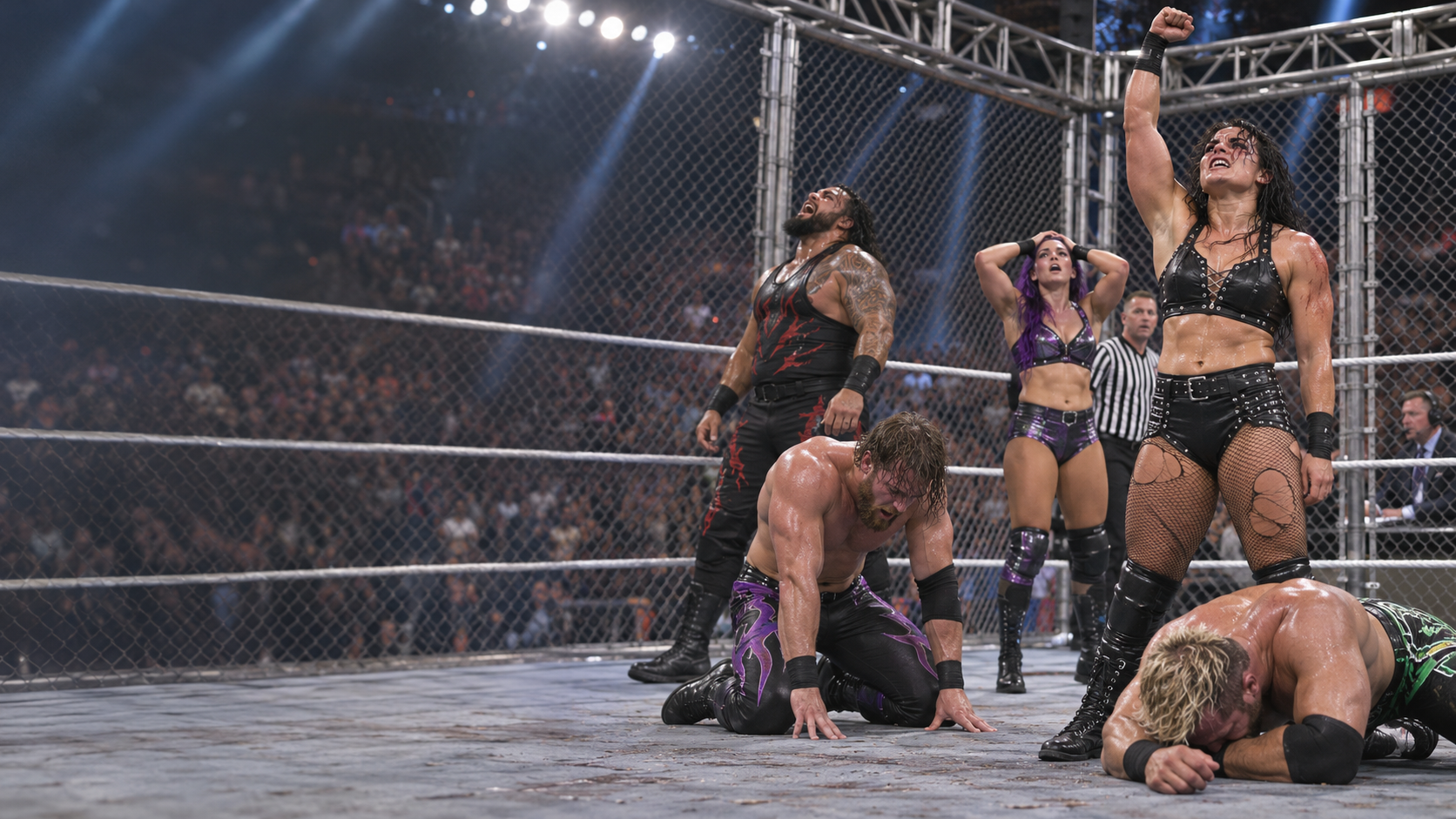 WWE Survivor Series 2026 Results and WarGames Coverage
-
 Mike Love, Beach Boys Co-Founder, Reported Dead at 85
-
 Horoscope for November 29, 2026: All Signs
-
 KATSEYE Mexico City Show Postponed Due to Illness
-
 Hunger Games: Sunrise on the Reaping Leads Friday Box Office
-
 Mike Love, Beach Boys Co-Founder, Dies at 85
-
 Broadway Gets a Speed-Dating Tribute at Macy’s Parade
-
 Martha Stewart Thanksgiving Typo: NSFW Post Explained
-
 Sunrise on the Reaping Reports $22.5M Black Friday Haul
-
 Best Moments From the 2026 Macy’s Thanksgiving Parade
-
 Chrisean Rock Reports Baby No. 2 After Blueface Split
-
 Pedro Pascal Discusses Suicidal Ideation After Mother’s Death
-
 Bronson Reed Death Report: What Is Confirmed?
-
 Britney Spears: Louisiana Thanksgiving Report